 English
 日本語
日本語 русский
 Español

Customer expresses intent; Communicate between the two parties; Provide analysis reports to customers; Reach a cooperation intention.
Content
- 1 The Short Answer: What Makes a Good Sun Shade Tarp
- 2 What a Sun Shade Tarp Actually Does
- 3 Fabric Types: HDPE Mesh, Woven Polyester and PVC-Coated Options
- 4 Comparing Shade Percentage and UPF Rating
- 5 What a Sun Shade Tarp Costs and Why
- 6 Sizing a Sun Shade Tarp Correctly
- 7 Installing a Sun Shade Tarp So It Survives Wind and Rain
- 8 Choosing a Sun Shade Tarp by Climate
- 9 Durability, Lifespan and Warning Signs of Wear
- 10 Cleaning and Maintenance
- 11 Buying Checklist
- 12 Matching a Sun Shade Tarp to Your Space
- 13 Frequently Asked Questions
- 13.1 Does a higher shade percentage always mean better sun protection?
- 13.2 Can a sun shade tarp handle rain?
- 13.3 How often should grommets be replaced?
- 13.4 What color sun shade tarp blocks the most heat?
- 13.5 Is knitted or woven fabric better for a sun shade tarp?
- 13.6 How much should a sun shade tarp cost for an average patio?
- 13.7 Can a sun shade tarp be left up year-round?
- 13.8 Do sun shade tarps come in custom shapes for irregular spaces?
The Short Answer: What Makes a Good Sun Shade Tarp
The best sun shade tarp for most outdoor spaces is a knitted HDPE (high-density polyethylene) mesh rated between 70 percent and 90 percent shade, hemmed on all edges, and fitted with brass or galvanized grommets spaced every 18 to 24 inches. This combination blocks the majority of harmful UV rays while still letting air pass through, which keeps the fabric from acting like a sail in the wind and keeps the space underneath noticeably cooler. Woven polyester tarps with a PVC or acrylic coating are the better pick only when rain runoff, not just sun, is the main concern.
Everything below breaks down why that recommendation holds up: the fabric types on the market, how shade percentage and UPF actually relate to comfort, what a sun shade tarp costs and why, how to size and install a tarp so it survives its first storm season, climate-specific picks, and how to keep it looking new for years instead of months.
What a Sun Shade Tarp Actually Does
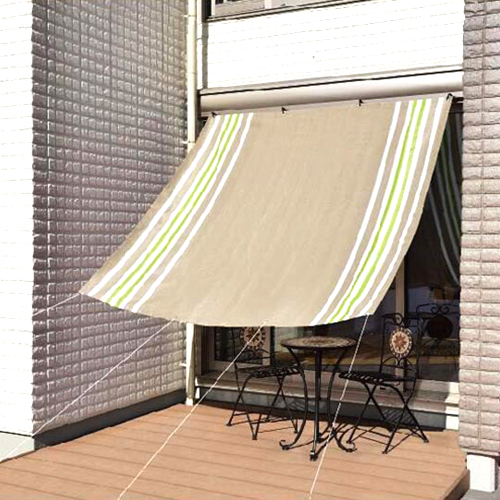
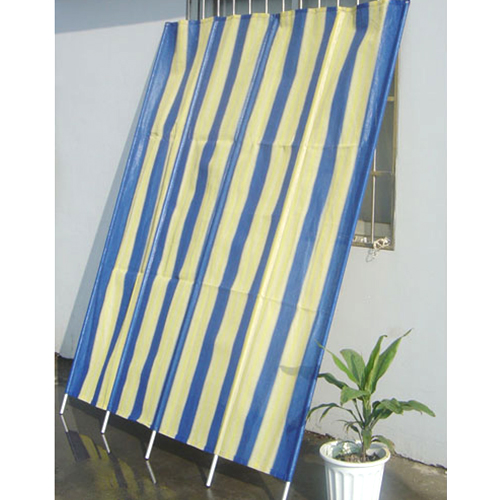
A sun shade tarp is a tensioned panel of UV-treated fabric, strung between posts, a pergola frame, a fence line, or existing structures to cut down direct sunlight over a patio, garden, parking spot, or animal enclosure. Unlike a solid roof, most sun shade tarps are built from a knitted or woven mesh that filters light rather than blocking it entirely, so the covered area stays bright without turning into an oven.
Shade Tarp vs. Shade Sail vs. Rain Tarp
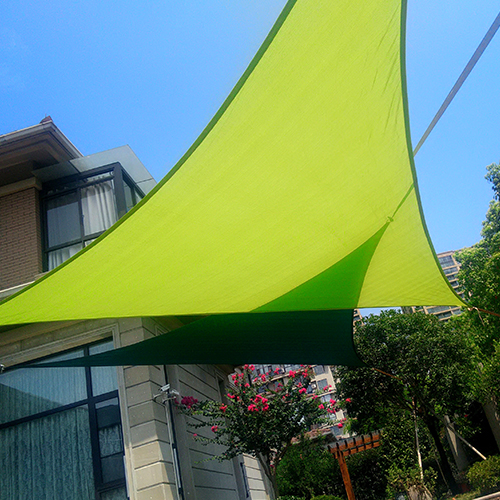
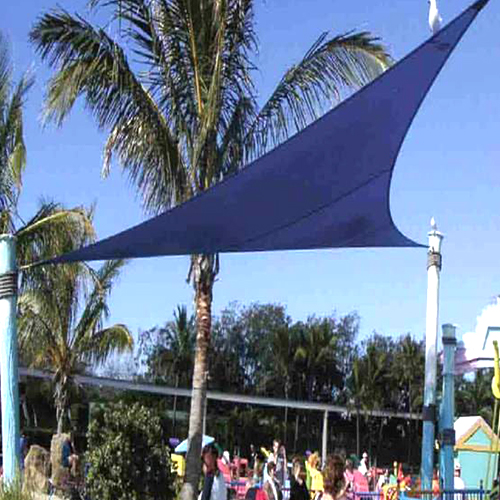
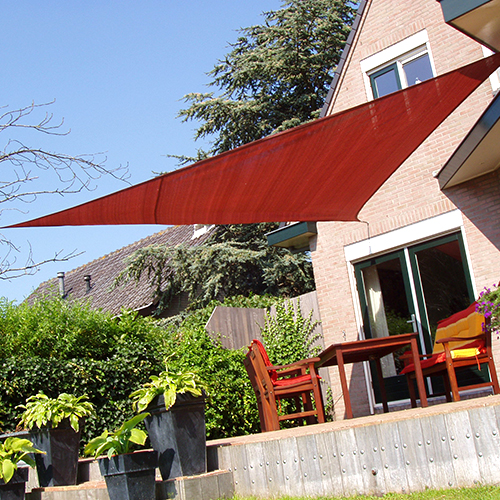
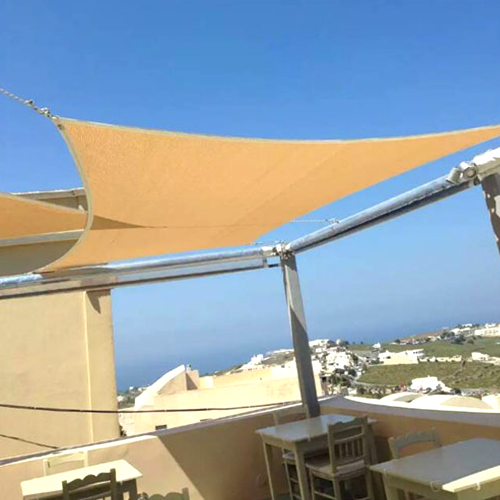
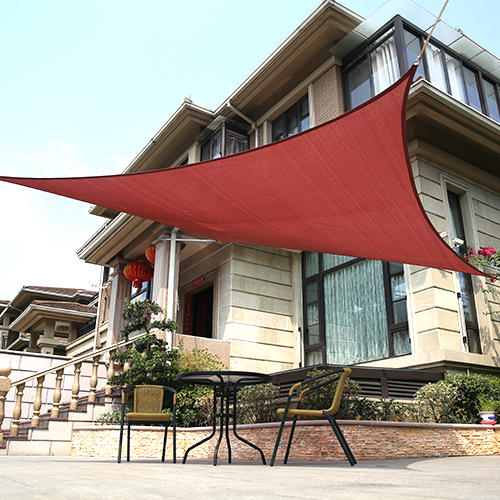
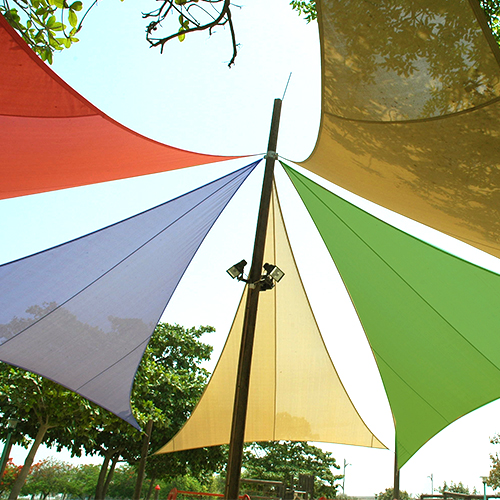
These three terms get used interchangeably, but they describe different products. A shade tarp is typically rectangular or square and mesh-based, made for straightforward sun blocking over patios or gardens. A shade sail is cut and stitched with a curved, tensioned edge, often triangular or hyperbolic, so it holds its shape under load, and is the better choice for larger architectural installations where visual design matters as much as function. A rain tarp or waterproof tarp uses a solid, coated fabric with no mesh, built to shed water rather than filter light, and trades away airflow to do it.
Why Airflow Matters as Much as Shade
A common misconception is that more coverage always means more comfort. In practice, a solid, non-breathable cover can trap warm air underneath on a still day, sometimes making the space feel stuffier than open shade from a mesh panel. The open weave of a knitted sun shade tarp lets hot air rise and escape rather than pooling under the fabric, which is part of why mesh remains the default choice for everyday outdoor comfort rather than solid vinyl.
Fabric Types: HDPE Mesh, Woven Polyester and PVC-Coated Options
Fabric choice is the single biggest factor in how a sun shade tarp performs over its lifetime. Three materials dominate the market, and each solves a different problem.
Knitted HDPE Mesh
High-density polyethylene mesh is the most widely used sun shade tarp fabric for residential use. It is knitted rather than woven, which means the fibers interlock in loops instead of crossing at right angles, giving the fabric some give and making it resistant to unraveling if a small snag starts. HDPE mesh is lightweight, breathable and naturally mold and mildew resistant because it does not absorb moisture. Weight is usually listed in GSM (grams per square meter), and mid-weight residential panels tend to fall around 180 to 220 GSM, while commercial-grade knitted mesh often reaches 300 to 340 GSM for extra tear resistance and a longer service life.
Woven Polyester, PVC or Acrylic Coated
Woven polyester fabrics create a tighter, more solid surface than knitted HDPE. On their own they still let some light and air through, but when coated with PVC or acrylic they become water resistant to fully waterproof. This makes coated polyester the right pick for anyone who wants rain coverage in addition to sun blocking, such as over a car wash bay, a market stall, or a patio in a rainy climate. The tradeoff is reduced airflow, so heat can build up underneath compared with an open mesh panel on a still, sunny day.
Solution-Dyed vs. Printed Fabric
Solution-dyed fabric has color mixed into the fiber before it is spun, so the color runs through the entire thread rather than sitting on the surface. This matters because surface-printed or piece-dyed fabric fades faster under constant UV exposure, while solution-dyed panels typically hold their color for several years longer under the same sun load.
Fabric Weight and Denier
Denier measures the thickness of the individual fibers used to knit or weave the fabric, and heavier deniers generally correlate with better tear resistance. A lightweight residential panel might use standard-weight HDPE fiber, while heavy-duty commercial mesh is often built from 300 denier or heavier fiber for applications that see constant handling, livestock contact, or repeated setup and takedown.
Comparing Shade Percentage and UPF Rating
Shade percentage describes how much visible light the fabric physically blocks based on the density of the knit or weave. UPF, or Ultraviolet Protection Factor, measures how much UV radiation specifically gets through, which is not always a one-to-one match with shade percentage because UV wavelengths behave differently than visible light. A reputable sun shade tarp should list both figures rather than shade percentage alone.
| Shade Percentage | Airflow | Best Suited For |
|---|---|---|
| 30 to 50 percent | Maximum airflow | Shade-tolerant plants, light dappling over seating areas |
| 60 to 75 percent | High airflow | Patios, gardens, general outdoor comfort |
| 80 to 90 percent | Moderate airflow | Pergolas, pool decks, vehicle and equipment cover |
| 95 percent and up | Lower airflow | Livestock shelters, greenhouses in extreme heat, dense shade needs |
For most backyard patios and garden seating areas, a 70 to 90 percent shade rating with a UPF of 50 or higher gives the best balance of cooling effect and comfort, since going past roughly 95 percent starts to noticeably darken the space and cuts down the breeze that carries heat away.
What a Sun Shade Tarp Costs and Why
Pricing for sun shade tarps varies widely because size, material, and construction quality all move the number independently. As a general guide, basic mesh tarps in stock sizes run roughly 0.30 to 0.80 per square foot, so a small 8 by 8 foot panel often lands under 30 dollars while a 12 by 20 foot panel can run 60 to 120 dollars depending on shade percentage and grommet quality. Custom-cut panels with hemmed edges and grommets built to an exact measurement typically start around 4 to 6 dollars per square foot once fabrication and finishing are included, since every edge has to be cut, hemmed, and reinforced by hand rather than pulled from a standard roll.
Factors That Move the Price
- Size and total square footage, with larger panels often costing less per square foot due to material efficiency
- Fabric weight and denier, since heavier, more tear-resistant fabric costs more per yard
- Custom sizing and shaping versus a standard rectangular stock size
- Hardware quality, including stainless steel or brass grommets versus basic aluminum
- Edge finishing, such as double-stitched hems or reinforced corner patches
A slightly higher upfront cost on a heavier, better-finished panel usually pays for itself through a longer service life and fewer replacements, which matters most in regions with intense sun or frequent storms.
Sizing a Sun Shade Tarp Correctly
Undersizing is the most common mistake buyers make. Measure the full area you want shaded, then add extra margin rather than ordering an exact match.
- Add at least 12 to 18 inches of overhang beyond the seating or activity zone on each side, since shade shifts with the sun through the day
- Account for anchor point setback, since posts or fixing points typically sit a few inches inside the finished panel edge, not at the exact corner
- For rectangular patios, measure both diagonals in addition to the sides to confirm the space is square before ordering a fixed-shape panel
- Oversized custom panels can be tensioned down with rope and grommets, but an undersized tarp cannot be extended after purchase
Stock Sizes vs. Custom Cut
Stock rectangular sizes such as 10 by 12, 12 by 16, and 12 by 20 feet cover most standard patios and garden beds at the lowest cost per square foot. Irregular spaces, sloped structures, or multi-post installations usually call for a custom-cut panel, which costs more but eliminates the gaps and overlaps that come from trying to force a rectangular stock tarp onto an oddly shaped area.
Installing a Sun Shade Tarp So It Survives Wind and Rain
How a tarp is installed matters as much as the fabric itself. Most failures trace back to tension, drainage, or anchor points rather than the material wearing out.
Tension and Pitch
A taut panel with a pitched angle sheds both wind and water far better than a flat, loose one. A flat, slack tarp behaves like a parachute in gusts and can pool rainwater in the center, and the added weight of pooled water is one of the leading causes of grommet failure and tarp collapse. Setting mounting points at different heights, with roughly a 3-foot difference from corner to corner where possible, keeps a natural pitch that drains water and reduces flutter. For rain-shedding purposes on coated fabric, aim for at least a 30-degree pitch angle.
Anchoring and Grommet Spacing
Look for panels with grommets spaced every 18 to 24 inches along every edge, not just at the corners. Lacing rope through every grommet and back to the frame or a steel cable spreads stress evenly across the whole panel; anchoring only at the four corners concentrates all the load on four points and is the fastest way to tear a fabric edge in a storm. Braided poly rope of 5/16 to 3/8 inch diameter is a common recommendation because it displaces wind load evenly without the stretch of thinner cordage.
What to Avoid
- Avoid bungee cords for tensioning, since UV exposure degrades the rubber and it loses elasticity within a season or two
- Avoid stiff wire or fine cordage that has no flex, since it transfers shock loads directly into the grommets during gusts
- Avoid letting the fabric rub directly against a rigid frame, since abrasion from movement wears fabric faster than plain sun exposure does
- Avoid extending more than one corner on cable or chain beyond the standard mounting distance, since multiple extended corners let the whole panel move excessively in wind
Choosing a Sun Shade Tarp by Climate
Hot, Dry and High-UV Regions
In consistently sunny, arid climates, prioritize UPF rating over shade percentage alone, and lean toward lighter or reflective colors that bounce heat rather than absorb it. A 70 to 85 percent knitted HDPE mesh with a UPF of 50-plus generally keeps the space underneath noticeably cooler than a dark, dense panel at the same shade rating.
Coastal and High-Wind Areas
Wind load, not sun exposure, is usually the limiting factor here. Choose a lower-profile installation with a tighter pitch, reinforced hems, and grommets spaced no more than 18 inches apart. Radial or curved-edge shade sail designs handle gusts better than a flat rectangular tarp because the tension is distributed more evenly across the panel.
Humid or Rainy Climates
Standard HDPE mesh resists mold well because it does not absorb water, which makes it a safer long-term choice than uncoated woven fabric in humid regions. If rain coverage is also a priority, a PVC or acrylic-coated polyester panel pitched at a steep angle sheds water effectively, but should be inspected more often for pooling since coated fabric does not drain through the material itself.
Durability, Lifespan and Warning Signs of Wear
A well-made HDPE sun shade tarp installed correctly typically lasts three to seven years outdoors before shade performance noticeably declines, though heavier commercial-grade knitted panels with reinforced, stitched hems and strong UV treatments can last a decade or more. Watch for these early signs that a panel needs attention or replacement:
- Fraying or pulled threads starting at a grommet, which signals the reinforcement patch has failed
- Visible color fading in one section, often where the panel gets the most direct afternoon sun
- Sagging in the center that does not tighten back up after re-tensioning the corners
- Small pinholes spreading into a run, which is more common on woven fabric than on knitted mesh
Cleaning and Maintenance
Routine cleaning protects both the fabric and the UV coating. Rinse the tarp with a garden hose to remove dust and pollen every few weeks during heavy-use seasons, and use a soft brush with mild soapy water for stuck-on debris such as tree sap or bird droppings. Avoid pressure washers on knitted mesh, since the concentrated water stream can stretch or distort the knit. Before storms, check that all grommets are still seated and that rope tension has not loosened from thermal expansion and contraction over the summer.
Seasonal Storage
In regions with harsh winters, taking the tarp down and storing it loosely folded in a dry space extends its working life significantly, since UV-resistant coatings still slowly break down even in cold, low-sun months, and snow load on a mesh panel can stretch or tear it.
Repairing Minor Damage
Small tears or pulled grommets do not always mean the whole panel needs replacing. Reinforcement patches, grommet repair kits, and UV-rated repair tape can extend a panel's usable life by a season or more, especially on knitted HDPE mesh where the interlocking loops resist the tear from spreading further once patched.
Buying Checklist
Before ordering a sun shade tarp, confirm the following details so the panel matches both the space and the local climate:
- Measured dimensions of the space, plus overhang margin on each side
- Shade percentage and UPF rating appropriate to the intended use
- Fabric type, knitted HDPE mesh for airflow or coated polyester for rain resistance
- Grommet material and spacing, ideally no more than 24 inches apart
- Hem and corner reinforcement quality
- Color, factoring in solution-dyed fabric for better fade resistance and lighter colors for heat reflection
- Whether the installation site needs a custom shape rather than a standard rectangle
Matching a Sun Shade Tarp to Your Space
| Use Case | Recommended Fabric | Shade Percentage |
|---|---|---|
| Backyard patio or deck | Knitted HDPE mesh | 70 to 85 percent |
| Vegetable garden or nursery | Knitted HDPE mesh | 30 to 50 percent |
| Pool deck or pergola | Knitted HDPE mesh | 80 to 90 percent |
| Vendor stall or car wash bay | PVC-coated polyester | Solid, waterproof |
| Livestock or poultry shelter | Heavy knitted HDPE mesh | 90 to 95 percent |
Frequently Asked Questions
Does a higher shade percentage always mean better sun protection?
Not necessarily in a straight line. Shade percentage measures visible light blocked, while UPF measures UV radiation blocked, and the two do not scale identically. A 90 percent shade panel with a low-quality UV treatment can underperform an 80 percent panel with a strong UPF 50-plus finish, so check both figures rather than shade percentage alone.
Can a sun shade tarp handle rain?
A standard mesh sun shade tarp is not waterproof by design; the open knit that provides airflow also lets rain through, though it does soften a light drizzle. For genuine rain protection, choose a PVC or acrylic-coated woven polyester tarp instead of an open mesh panel.
How often should grommets be replaced?
Grommets typically outlast the surrounding fabric if the panel is installed with proper tension and even load distribution. If a grommet pulls loose or the surrounding fabric frays, a reinforcement patch or replacement grommet kit can extend the panel's usable life by a season or two without replacing the whole tarp.
What color sun shade tarp blocks the most heat?
Darker colors such as black or dark green tend to absorb more heat into the fabric itself, while lighter colors and reflective finishes bounce more solar energy away before it reaches the fabric surface. For pure temperature control underneath the tarp, a lighter or reflective panel generally keeps the covered area cooler than a dark one at the same shade percentage.
Is knitted or woven fabric better for a sun shade tarp?
Knitted HDPE mesh is generally the better all-around choice for open-air sun shading because it breathes well, resists mold, and will not fully unravel from a small snag. Woven fabric, especially when coated, is the better choice when the goal includes water resistance rather than sun blocking alone.
How much should a sun shade tarp cost for an average patio?
A standard 12 by 16 or 12 by 20 foot knitted mesh panel in a stock size typically falls in the 60 to 150 dollar range depending on shade percentage and hardware quality, while a custom-cut panel of similar size with reinforced hems can run several times that once fabrication is included.
Can a sun shade tarp be left up year-round?
It depends on the climate. In mild, dry regions many panels stay up indefinitely with periodic cleaning and tension checks. In areas with heavy snow, ice storms, or hurricane-force wind, taking the panel down for the off-season protects both the fabric and the mounting hardware from damage that year-round exposure would otherwise cause.
Do sun shade tarps come in custom shapes for irregular spaces?
Yes. Beyond standard rectangles and squares, many suppliers cut panels to triangular, hexagonal, or fully custom shapes to fit irregular patios, multi-post installations, or sloped structures, though custom shaping adds to both the cost and the lead time compared with a stock rectangular panel.

 浙公网安备 33068302000509号