 English
 日本語
日本語 русский
 Español

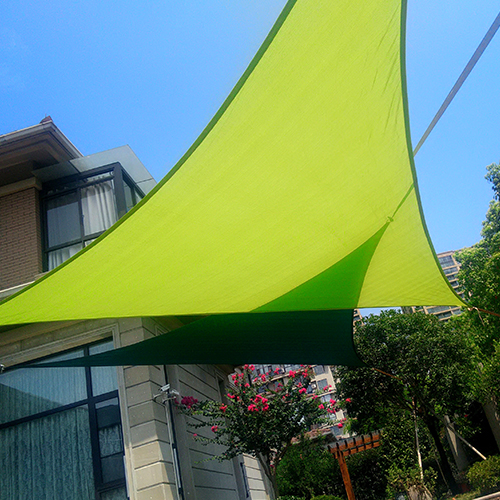
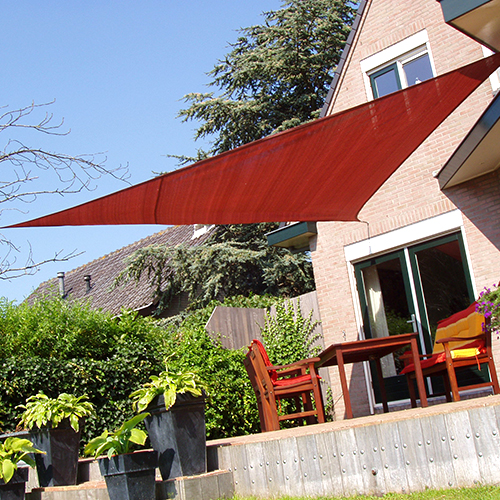
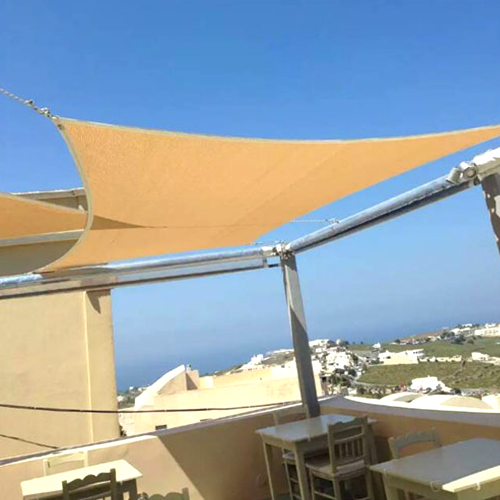


Customer expresses intent; Communicate between the two parties; Provide analysis reports to customers; Reach a cooperation intention.
Content
- 1 What Does It Mean to Attach a Carport to Your House?
- 2 Permits and Zoning: The First Thing to Check
- 3 Structural Compatibility: Can Your House Wall Handle It?
- 4 Carport Materials: Which Option Works Best When Attached to a House?
- 5 How to Attach a Carport to Your House: The Basic Process
- 6 Carport Roof Options and How They Connect to Your Home's Roofline
- 7 Cost Breakdown: What to Budget for an Attached Carport
- 8 Can You Convert an Attached Carport into a Garage Later?
- 9 Attached Carport vs. Detached Carport: Which Is Better for Your Home?
- 10 Common Mistakes to Avoid When Attaching a Carport to Your House
- 11 Does an Attached Carport Add Value to Your Home?
- 12 Maintenance Tips for a Carport Attached to Your House
Yes, you can attach a carport to your house — and in most cases, it's a practical, cost-effective alternative to building a full garage. An attached carport typically costs between $3,000 and $10,000, compared to $20,000–$50,000 for a new attached garage. However, whether you should attach a carport to your house depends on your local zoning laws, the structural compatibility of your home's exterior wall, your property's layout, and the materials you plan to use. This guide covers everything you need to know before starting your carport attachment project.
What Does It Mean to Attach a Carport to Your House?
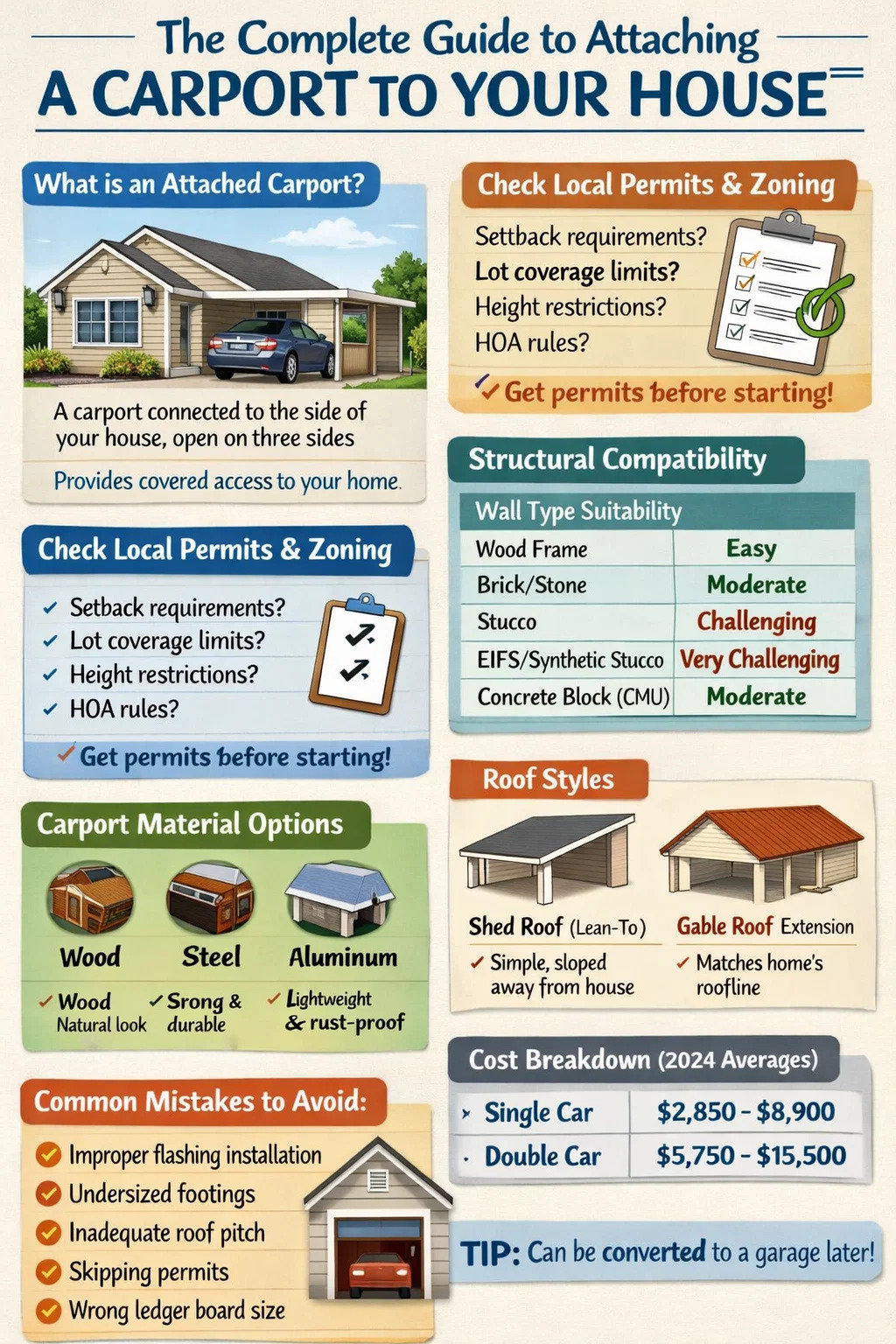
An attached carport is a roofed structure that connects directly to the exterior wall of your home. Unlike a freestanding or detached carport, which stands independently on your property, an attached carport shares at least one wall or support connection with your house. This design allows you to walk from your car to your front or side door without stepping into rain or direct sunlight.
Attached carports are typically open on three sides — only the house wall serves as a closed side. Some homeowners choose to enclose one or two additional sides with lattice panels, privacy screens, or partial walls for added protection from wind and debris.
The structure is anchored to your home using ledger boards, posts, or a combination of both. The roof of the carport either ties into the existing roofline or extends outward at a slight pitch to allow water runoff. Getting this connection right is one of the most critical parts of the project.
Permits and Zoning: The First Thing to Check
Before purchasing any materials or breaking ground, check with your local building department. Most municipalities require a building permit for any permanent structure attached to a house, including carports. Skipping this step can result in fines, forced removal, or complications when selling your home.
Key zoning questions to ask:
- What is the minimum setback from property lines for an attached structure?
- Is there a maximum percentage of your lot that can be covered by structures?
- Are there height restrictions for carport structures?
- Does your HOA have rules about attached carports or open-sided structures?
- Will the structure require an engineer's stamp or inspection?
In many suburban areas, setback requirements are between 3 and 10 feet from side and rear property lines. If your driveway runs close to a property line, this could limit the width of your carport or affect placement entirely. Urban properties may have stricter regulations than rural ones.
Permit fees generally range from $50 to $500 depending on your jurisdiction and the size of the structure. The permit process may take anywhere from a few days to several weeks, so factor this into your project timeline.
Structural Compatibility: Can Your House Wall Handle It?
Attaching a carport to your house requires anchoring a ledger board — a horizontal beam — directly into the house's rim joist, studs, or masonry. Not every wall is equally suitable for this. Wood-framed homes with standard stud spacing (16 or 24 inches on center) are the easiest to attach to, while brick veneer, stucco, and EIFS (synthetic stucco) walls require more careful flashing and waterproofing to prevent moisture infiltration.
Wall type compatibility at a glance:
| Wall Type | Ease of Attachment | Key Considerations |
|---|---|---|
| Wood frame (vinyl or wood siding) | Easy | Requires proper flashing; use structural screws into studs |
| Brick or stone | Moderate | Use masonry anchors; ensure waterproof sealant between ledger and brick |
| Stucco | Challenging | High moisture intrusion risk; requires careful flashing and sealing |
| EIFS / synthetic stucco | Very challenging | Highly susceptible to moisture damage; professional installation strongly advised |
| Concrete block (CMU) | Moderate | Solid and stable; use appropriate concrete anchors |
One of the biggest concerns with any attached structure is water intrusion. Where the ledger board meets your house wall, there must be proper flashing — typically metal or rubberized material — to direct rainwater away from the joint. Skipping this step leads to rot, mold, and structural damage inside your wall cavity over time.
Carport Materials: Which Option Works Best When Attached to a House?
The material you choose for your attached carport affects its appearance, durability, maintenance requirements, and cost. The three most common materials are wood, steel, and aluminum. Each has distinct advantages depending on your climate, budget, and aesthetic preferences.
Wood Carports
Wood is the most popular choice for attached carports on residential homes because it blends naturally with traditional and craftsman-style architecture. Pressure-treated lumber resists rot and insects, and the structure can be painted or stained to match your home's exterior exactly. A wood attached carport typically costs $4,000–$10,000 for materials and labor, depending on size and design complexity.
The downside is maintenance. Wood requires periodic sealing, painting, or staining every 3–7 years. In wet climates, untreated or poorly sealed wood can develop rot at post bases where they contact the ground or concrete.
Steel Carports
Steel carport kits are widely available and can be configured for attachment to a house. They are incredibly strong — certified steel carports can handle snow loads exceeding 35–50 lbs per square foot — making them ideal for areas with heavy snowfall. Steel structures are also resistant to fire and pests.
The main disadvantage is aesthetics. Steel carports have an industrial look that doesn't always complement residential architecture. They can be powder-coated in various colors, but the corrugated metal roofing and boxy post design may clash with brick or wood-sided homes.
Aluminum Carports
Aluminum carports are lightweight, rust-proof, and low-maintenance. They're an excellent choice in humid or coastal climates where steel might corrode. However, aluminum is less rigid than steel and may not be suitable for high-snow-load regions without additional engineering.
Aluminum carport kits range from $1,500 to $6,000 for materials, with installation bringing the total to $3,000–$9,000 depending on site conditions and attachment complexity.
How to Attach a Carport to Your House: The Basic Process
While larger projects should involve a licensed contractor, understanding the general process helps you oversee the work, evaluate bids, and make informed decisions. Here is a step-by-step overview of what attaching a carport to a house typically involves.
- Obtain permits and approval. Submit your building plans to the local authority and receive written approval before any construction begins.
- Mark the layout. Use stakes and string to mark the carport footprint on the ground, ensuring proper setback from property lines and correct positioning relative to your driveway.
- Dig and pour footings. Concrete footings anchor the support posts. Footing depth depends on your local frost line — in colder climates, footings may need to go 36–48 inches deep to prevent heaving.
- Install posts. Set posts in concrete and allow adequate curing time (typically 24–48 hours minimum). Posts are usually 4x4 or 6x6 for wood, or equivalent steel tubing.
- Attach the ledger board to the house. This is the most critical step. The ledger is typically a 2x10 or 2x12 board bolted into the house's rim joist or structural studs using lag screws or structural bolts. Flashing must be installed before and after ledger installation.
- Install the beam and rafters. A beam spans the outer posts; rafters run from the ledger to the beam to form the roof structure. Rafter spacing is typically 16–24 inches on center.
- Install roofing. Options include corrugated polycarbonate panels (transparent or tinted), metal roofing, or asphalt shingles that match the home's roof.
- Final inspection. Schedule a required inspection if your permit demands one before considering the project complete.
The entire process for a straightforward attached carport (one to two cars) typically takes a skilled crew 2–4 days to complete. DIY projects may take 1–3 weekends depending on experience level.
Carport Roof Options and How They Connect to Your Home's Roofline
The roof of your attached carport needs to shed water away from your house, not toward it. There are two main approaches to carport roof design when attaching to a house:
Shed Roof (Lean-To)
This is the most common design for attached carports. The roof has a single slope, pitched away from the house. Water runs off the outer edge rather than toward the home's exterior wall. A minimum slope of 1/4 inch per foot is recommended, though steeper slopes (1:12 or more) perform better in heavy rain areas.
Gable Roof Extension
A gable roof extension creates a peaked roof that ties visually into the home's existing roofline. This approach looks more architecturally integrated but is more complex and expensive to build. It requires careful flashing where the new roof meets the house wall or existing roof to prevent leaks.
Polycarbonate roofing panels are a popular choice for carport roofs because they allow natural light to filter through while still protecting vehicles from rain. Clear panels transmit up to 90% of visible light, while tinted panels reduce heat buildup underneath — useful in hot climates.
Metal roofing (standing seam or corrugated) offers superior durability with lifespans of 40–70 years. It's more expensive upfront but requires almost no maintenance. Asphalt shingles can be used to match the home's existing roof, though they have a shorter lifespan of 20–30 years.
Cost Breakdown: What to Budget for an Attached Carport
The total cost of attaching a carport to your house varies widely based on size, materials, and labor rates in your area. Below is a typical cost breakdown for a single-car (12x20 ft) and double-car (20x20 ft) attached carport.
| Cost Component | Single Car (12x20 ft) | Double Car (20x20 ft) |
|---|---|---|
| Materials (lumber/metal/aluminum) | $1,200 – $3,500 | $2,500 – $6,000 |
| Concrete footings | $200 – $600 | $400 – $1,000 |
| Roofing material | $300 – $1,200 | $600 – $2,500 |
| Flashing and waterproofing | $100 – $300 | $150 – $500 |
| Labor | $1,000 – $3,000 | $2,000 – $5,000 |
| Permits | $50 – $300 | $100 – $500 |
| Total Estimated Cost | $2,850 – $8,900 | $5,750 – $15,500 |
Prices are higher in metropolitan areas like San Francisco, New York, or Seattle compared to rural regions. Hiring a licensed general contractor adds overhead but reduces risk of costly mistakes, especially in the ledger attachment and waterproofing stages.
Can You Convert an Attached Carport into a Garage Later?
One of the advantages of building an attached carport rather than a detached one is the possibility of converting it into a fully enclosed garage in the future. Since the structure is already connected to your house and has a roof and at least one solid wall, adding the remaining three walls and a garage door is a more manageable project than starting from scratch.
Converting an attached carport to a garage typically costs $8,000–$25,000, depending on the complexity of the enclosure and whether electrical wiring, insulation, and drywall are included. This is still significantly less than building a new attached garage from the ground up.
To make future conversion easier, consider these steps during the initial carport build:
- Size the footings to handle the additional load of walls and a garage door header.
- Ensure post spacing accommodates standard garage door widths (8, 9, or 16 feet).
- Rough in electrical conduit during construction so wiring can be added later.
- Install a concrete slab rather than a gravel floor if garage conversion is a possibility.
From a real estate standpoint, enclosed garages add more value than carports. A converted garage can add $10,000–$30,000 to a home's market value in many U.S. markets, depending on local demand.
Attached Carport vs. Detached Carport: Which Is Better for Your Home?
Homeowners frequently debate whether to attach a carport to the house or build a freestanding structure. Each option has advantages and trade-offs depending on property layout, HOA restrictions, and personal priorities.
Advantages of attaching a carport to your house:
- Direct covered access from car to home — no getting wet between the two structures.
- Uses the house wall as one side, reducing material and labor costs.
- More visually integrated with the home's exterior.
- Potential to convert to an enclosed garage later.
Advantages of a detached carport:
- No risk of moisture infiltration at the house wall junction.
- Can be placed anywhere on the property, including a rear yard.
- Easier to install with a prefabricated kit without structural coordination with the house.
- May not require a permit in some jurisdictions if it qualifies as a temporary structure.
For most homeowners with a front-facing driveway and a side entry door, attaching the carport to the house makes more practical sense. If your driveway approaches the house from the rear, or if you simply want covered parking in a different part of your yard, a detached carport may be a better fit.
Common Mistakes to Avoid When Attaching a Carport to Your House
Many carport projects run into problems that could have been easily avoided. Here are the most common errors and how to prevent them.
Improper flashing installation
This is the single most common cause of carport-related moisture damage. Flashing must be installed under the siding and above the ledger board so that any water running down the house wall is directed outward and away from the ledger. Many DIYers install flashing incorrectly or skip it entirely, leading to rot within 2–5 years.
Undersized footings
Posts set in shallow or undersized concrete footings can heave in freezing temperatures or shift under wind load. Footing size and depth must match local frost line depths and the structural load of the carport. In most northern U.S. states, frost depth is 36–48 inches.
Inadequate roof pitch
A flat or near-flat carport roof will pool water and fail quickly. Even polycarbonate or metal roofing needs a minimum pitch of 1/4 inch per foot (roughly 1.2 degrees), though a steeper 2:12 pitch (about 9.5 degrees) is far more reliable in high-rainfall areas.
Skipping permits
Beyond the legal risk, unpermitted structures can cause problems when refinancing or selling your home. A buyer's inspector will flag an unpermitted attached carport, potentially requiring costly retroactive permits or demolition as a condition of sale.
Wrong ledger board size
The ledger board must be sized to carry the dead load (roofing) and live load (snow, wind) of the carport roof. For most residential attached carports up to 12 feet wide, a 2x10 or 2x12 ledger is standard. Using undersized lumber here creates a genuine safety risk.
Does an Attached Carport Add Value to Your Home?
The impact of an attached carport on home value varies by market, but in most cases it adds some measurable value — just not as much as an enclosed garage. According to data from the National Association of Realtors, covered parking of any kind adds roughly $5,000–$15,000 in perceived value in suburban markets, though enclosed garages consistently outperform carports.
In warmer climates such as the American Southwest, Texas, and Florida, carports are considered normal and desirable by buyers. In colder climates, buyers tend to prefer fully enclosed garages. A well-built attached carport that visually matches the home's architecture will add more value than a basic metal kit structure bolted to the side of the house.
From a cost-to-value standpoint, attached carports typically have a higher return on investment than detached garages because of the lower initial cost. If you spend $7,000 on an attached wood carport and it adds $10,000 in appraisal value, the ROI is strong. This is less reliable in markets where buyers strongly prefer enclosed garages.
Maintenance Tips for a Carport Attached to Your House
Once your attached carport is built, regular maintenance is essential — particularly at the connection point between the carport and your house wall. Neglecting this area is the fastest route to expensive structural repairs.
- Inspect flashing annually. Check that flashing at the ledger-to-house junction is intact, not bent or cracked, and has no gaps where water could enter.
- Clear debris from the roof. Leaves, twigs, and other debris block water drainage and accelerate roofing material degradation. Clean the roof at least twice a year.
- Check post bases for moisture. The base of each post where it meets the footing or ground is vulnerable to rot and corrosion. Metal post bases help keep wood posts elevated off concrete.
- Re-apply sealant or caulk as needed. The joint between the ledger and the house wall may need recaulking every 3–5 years to maintain a watertight seal.
- Repaint or restain wood structures. Wood carports should be repainted or restained every 4–7 years depending on sun and rain exposure.
- Tighten fasteners. Lag bolts, joist hangers, and post hardware can loosen over time due to thermal expansion and contraction. An annual check takes only a few minutes.
A well-maintained wood attached carport can last 30–40 years. Steel and aluminum structures, if properly powder-coated, can last even longer with minimal maintenance effort.

 浙公网安备 33068302000509号