 English
 日本語
日本語 русский
 Español



Customer expresses intent; Communicate between the two parties; Provide analysis reports to customers; Reach a cooperation intention.
Content
- 1 The Short Answer: Where Should You Put a Carport?
- 2 Sun Orientation: Why It Matters More Than Most People Think
- 3 Drainage and Ground Conditions: The Foundations of a Good Carport Site
- 4 Access and Traffic Flow: Practical Placement for Daily Use
- 5 Local Building Codes and Setback Requirements
- 6 Wind Direction and Weather Protection
- 7 Proximity to Trees, Overhead Lines, and Underground Services
- 8 Attached vs. Freestanding Carport: How Location Choice Differs
- 9 Lighting, Security, and Visibility Considerations
- 10 How Property Size and Shape Affect the Best Carport Location
- 11 Aesthetic Integration: Matching the Carport to the Home
- 12 A Practical Checklist for Choosing Your Carport Location
The Short Answer: Where Should You Put a Carport?
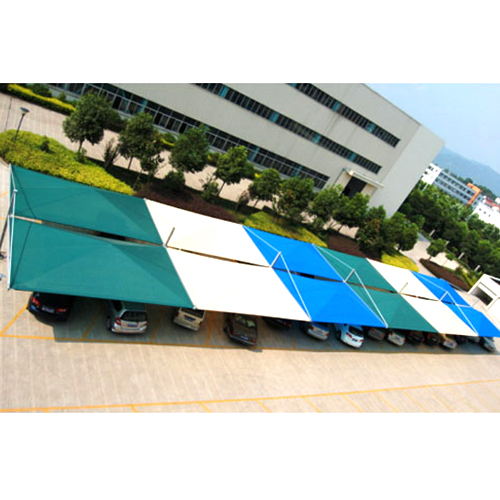
The best location for a carport is on a firm, level surface adjacent to your home's primary entry point — typically the side or front of the property — where drainage flows away from the structure, sun exposure is manageable, and access from the street is direct without requiring sharp turns. For most residential properties, this means placing the carport on the driveway, aligned with the existing vehicle approach path, set back at least 1 meter from property boundaries as most local codes require.
That's the foundation. But the right answer for your property depends on a combination of factors: orientation to the sun, prevailing wind direction, soil conditions, drainage gradients, proximity to utilities, and the specific building regulations in your area. Every one of these can shift the optimal placement by several meters — and getting it wrong costs money to fix later.

Sun Orientation: Why It Matters More Than Most People Think
Sun direction is one of the most overlooked factors when choosing a carport location, yet it directly affects how well the structure performs its core job: protecting your vehicle. In the Northern Hemisphere, a carport on the south or west side of a property will receive the most direct afternoon sun, which means the interior temperature under the canopy can still climb significantly during summer months. A south-facing opening with an east-west roof ridge will provide better shade coverage throughout the day than an east-facing opening.
UV radiation accelerates paint fading and dashboard cracking. Studies from the Automotive Fleet Association show that vehicles stored under shade structures experience up to 40% less UV-related interior damage compared to those parked in the open. That alone makes carport orientation worth getting right from the start.
North-Facing vs. South-Facing Carport Placement
In the Southern Hemisphere, the logic flips. A carport on the north side of the house will catch maximum sun. In Australia, for example, placing the carport on the south side of the property is generally preferred for shading performance. Meanwhile, in Canada or Northern Europe, a south-side carport location means you benefit from passive solar warmth in winter — useful when temperatures regularly drop below freezing and you want ice to melt off the roof and driveway more quickly.
There's no single universal rule — orientation is geography-dependent. Before deciding on placement, note where the sun rises and sets relative to your property, and track where shadows fall at midday in summer and winter. A simple shadow diagram sketched over a satellite image of your lot can save you from a costly positioning mistake.
Drainage and Ground Conditions: The Foundations of a Good Carport Site
Water is the enemy of any outdoor structure, and the carport location you choose must allow rainwater to drain away from both the structure and your home's foundation. A site that pools water after rain will damage posts, accelerate concrete slab deterioration, and create an ongoing mud and mold problem. The minimum recommended slope for a carport slab or gravel base is 1:100 (1 cm drop per 100 cm of run), though 1:50 is more practical in regions with heavy rainfall.
Avoid placing a carport in a natural low point of your yard — even if it seems flat and level. Low points collect runoff from the surrounding land, especially during storms. If the only viable location is in a depression, you'll need to invest in French drains, gravel sub-bases, or raised slab construction, which adds cost.
Soil Type and Load-Bearing Capacity
The ground beneath your carport must support the weight of the structure, the vehicles beneath it, and in snowy climates, the accumulated snow load on the roof. Clay-heavy soils shift and heave with moisture changes and can cause post footings to move over time. Sandy or loamy soils drain well but may require deeper footings. Expansive clay soils in parts of Texas, Oklahoma, and Queensland, Australia, are notorious for cracking slab foundations if not properly engineered.
A standard residential carport footing in stable soil is typically 300mm wide and 450mm deep. In problem soils or frost-prone areas, you may need footings 600mm deep or more. If you're unsure of your soil type, a basic soil test kit from a hardware store can indicate composition, or a local builder can advise based on what they've seen in your neighborhood.
Surface Options and Their Impact on Site Selection
- Concrete slab: The most stable and durable surface. Requires a level site or significant earthworks to create one. Best for long-term carport installations.
- Asphalt: Cheaper than concrete, softer in summer heat, better on uneven ground. Can sink under point loads (carport posts) over time.
- Gravel: The most drainage-friendly surface. Suits rural properties and temporary carport installations. Requires edging to prevent spread and regular top-ups.
- Pavers: Attractive and permeable if laid on a sand base. Suitable where aesthetics matter, though individual pavers can shift under heavy loads.
Your surface choice should align with your carport location: if the site has excellent natural drainage, gravel is a cost-effective option. If you're in a high-rainfall area or the site is partially shaded and slow to dry, a concrete slab with deliberate gradient is the safer investment.
Access and Traffic Flow: Practical Placement for Daily Use
A carport that's hard to access defeats its own purpose. Placement must account for the turning radius of your vehicles, the angle of approach from the street, and whether pedestrians regularly move through the same path. Standard passenger cars require a turning radius of between 4.5 and 6 meters to make a comfortable 90-degree turn into a parking bay. Larger SUVs and pickup trucks need closer to 7 meters. If your driveway doesn't provide that clearance, you'll be reversing every time — which becomes frustrating and creates a safety hazard.
The most convenient carport locations allow a vehicle to drive forward in and reverse out, or ideally drive straight through (in at the front, out at the side). If your property layout forces a reversing entry every time, consider whether a minor repositioning of the carport footprint could create a pull-through configuration — often just a meter or two of additional clearance makes a significant difference.
Carport Position Relative to the House Entry
Ideally, the carport should be positioned so that the path from vehicle to front door or side entry is sheltered and direct. If you're carrying groceries, young children, or work equipment, a carport located 15 meters from the house entrance is barely better than no carport at all on a rainy day. The structure should ideally connect — through a covered walkway, breezeway, or direct adjacency — to the main living entry of the home.
Many homeowners choose to attach the carport directly to the house wall or extend it from an existing porch or veranda. This approach, known as an attached carport, typically requires approval under building regulations but offers the best integration between parking and living space. A freestanding carport gives more flexibility in placement but doesn't provide the same level of connected shelter.
Local Building Codes and Setback Requirements
Building regulations govern where a carport can legally be placed on a residential lot, and ignoring them is one of the most expensive mistakes a homeowner can make. An unpermitted carport structure can trigger enforcement orders, forced removal, or complications when selling the property. The rules vary significantly by jurisdiction, but most local codes address the same core considerations.
Common Setback Rules for Carports
| Boundary Type | Typical Minimum Setback | Notes |
|---|---|---|
| Front property line | 3–6 meters | Often tied to streetscape rules |
| Side boundary | 0.9–1.5 meters | May be reduced with neighbor agreement |
| Rear boundary | 1–3 meters | Varies widely by zone type |
| From house wall (attached) | 0 meters (directly attached) | Requires building permit in most areas |
| From underground utilities | 1–3 meters | Check with utility company before digging |
In many Australian states, a freestanding carport under 20 square meters in area and under 3 meters in wall height may qualify as exempt development, meaning no planning permit is required. In the United States, rules differ county by county — some require permits for any permanent structure, others exempt open-sided shade structures. The UK has permitted development rights for carports on driveways, provided the structure is open on at least two sides and doesn't cover more than half the front garden.
Before breaking ground, contact your local council, planning department, or building authority. A 15-minute conversation or a quick check of their online planning portal can prevent months of enforcement headaches later.
Wind Direction and Weather Protection
One of the carport's primary functions is protecting vehicles from the elements — rain, hail, wind-driven debris, and in some regions, snow. The placement and orientation of the carport opening should take prevailing wind direction into account. A carport open on the side facing the dominant wind direction will funnel rain inside, partially negating its protective function.
In coastal regions, the prevailing onshore wind typically comes from one consistent direction — the ocean side. Positioning the carport so that the closed back or side faces into the prevailing wind significantly improves rain protection. In the UK, prevailing winds come predominantly from the southwest. In the American Midwest, storms often track from the northwest or southwest. In coastal Queensland, the wet season brings north to northeast winds. These details matter for placement decisions.
Using the House Itself as a Wind Break
An attached carport or one positioned on the leeward side of the house — the side sheltered from the prevailing wind — benefits from the building mass blocking much of the wind force. This is one of the strongest arguments for placing a carport on the side of the house rather than the front, particularly in areas with consistent wind patterns. The house wall acts as a passive wind screen, and a simple Colorbond or timber side panel on the carport's windward edge can further reduce wind-driven rain penetration by up to 60% compared to a fully open structure.
In cyclone or hurricane zones, carport location and construction specification are subject to additional engineering requirements. Wind-rated fasteners, deeper post footings, and engineer-certified designs are typically mandatory in these regions. A carport in a cyclone zone that isn't properly anchored and positioned can become a projectile hazard. Check local wind region classifications (for example, Wind Region C or D in Australia, or Exposure Category D in the US) when planning the project.
Proximity to Trees, Overhead Lines, and Underground Services
Trees are a common factor that drives carport placement decisions, but they require careful consideration. A large tree with overhanging branches positioned above a carport creates a combination of problems: leaf debris blocking gutters, sap and bird droppings on vehicles, root growth undermining footings, and in storms, branches or the entire tree falling on the structure. The general rule is to keep carport posts at least 2 meters away from established tree trunks, and to ensure no major branches overhang the roof line.
If you have significant trees on your property, check whether they are listed as protected under local council heritage tree registers before deciding on carport placement. In many municipalities, damaging the root zone of a protected tree — even underground — can result in substantial fines.
Overhead Power Lines
Placing a carport near overhead power lines is both a safety and regulatory issue. In Australia, the minimum clearance between a carport roof and overhead power lines is typically 3 meters for insulated lines and 5 meters for bare conductors, though this varies by state and voltage. In the UK, the Health and Safety Executive publishes safe working distances for proximity to overhead lines, and any structure within those zones requires notification to the network operator. In the US, the National Electrical Code sets similar clearance requirements.
Before finalizing the carport location, identify where power, gas, water, and telecommunications lines run — both overhead and underground. Dial Before You Dig services (available in Australia, the UK as 'LSBUD', and the US as '811') provide free identification of underground services near any proposed dig site. Striking a gas line or water main during post installation is dangerous, expensive, and entirely avoidable.

Attached vs. Freestanding Carport: How Location Choice Differs
The decision between an attached and freestanding carport fundamentally shapes where on the property the structure can go. Each configuration has distinct placement implications.
Attached Carport Placement
An attached carport connects directly to the house — usually fixed to an external wall via a ledger beam or bracket system. Placement is therefore constrained by the house's existing footprint. The most common locations for attached carports are the side of the house (particularly where the driveway already runs), or at the front of the home in cases where the house sits close to the street.
The advantage of an attached carport is direct integration with the home's weather protection. Walking from car to house under a continuous roof line is a real quality-of-life improvement in wet or cold climates. However, an attached structure is subject to greater regulatory scrutiny — it typically requires a building permit regardless of size, and must not compromise the structural integrity of the wall it connects to, block windows or egress paths, or reduce fire separation distances to a neighbor's boundary.
Freestanding Carport Placement
A freestanding carport stands independently, supported by its own post system, with no structural connection to the house. This gives significantly more flexibility in placement — the structure can go on the driveway, beside a shed, along a fence line, or anywhere on the lot that meets setback requirements and has suitable ground conditions.
Freestanding carport kits — available in steel, aluminum, and timber — are popular for their ease of installation and lower permit thresholds. Many homeowners install them without professional builders. However, freestanding structures require independent anchorage: each post must be footed adequately to resist uplift from wind, and the structure must be able to stand without lateral support from a building wall. In high-wind zones, freestanding carports need heavier engineered footings than attached versions of the same size.
Lighting, Security, and Visibility Considerations
A carport located in a dark corner of the property that isn't visible from inside the house creates both security and safety problems. Vehicles parked in poorly lit, low-visibility areas are more frequently targeted for break-ins. According to data from the UK's Office for National Statistics, vehicle crime is significantly higher on properties where parking areas are not visible from the street or from within the home. Positioning the carport where it can be seen from a living room, bedroom, or kitchen window adds a natural deterrent without requiring additional technology.
Lighting can be added to any carport location, but the infrastructure to support it (wiring, conduit runs) is much simpler when the carport is close to the house. A carport positioned at the far end of a long driveway, 20 or 30 meters from the home, requires either a long electrical run from the house or a standalone solar lighting solution. This isn't a dealbreaker, but it is an additional cost and complication to factor into placement decisions.
Motion Sensor Lighting and Camera Integration
Modern carport installations often incorporate motion-activated LED floodlights and security cameras. Camera effectiveness depends heavily on placement: a carport that is recessed behind fences, walls, or other structures may limit camera coverage angles. When selecting a carport location with security in mind, prioritize positions that allow a wide field of view toward the street, driveway entry, and house entry points simultaneously. A carport on the side of the house, with clear sightlines to the front gate and the side entry door, typically offers the best integrated security coverage.
How Property Size and Shape Affect the Best Carport Location
Not every property gives you a free choice of carport location. The geometry of the lot, existing structures, and landscaping all place real constraints on viable positions. Here's how different property types typically work out:
- Narrow urban lots: With side boundaries only 1–2 meters from the house walls, there's often only one viable side for a carport — whichever side has driveway access. The carport typically runs parallel to the house, taking up the driveway length. A tandem (two cars deep) single-width carport is the common solution on lots under 8 meters wide.
- Corner lots: These properties have two street frontages, giving more options for driveway placement and therefore carport location. A carport positioned on the secondary street side keeps the main frontage cleaner and often reduces front setback complications. However, corner lots may have additional sight-line restrictions at the intersection that limit how close any structure can be to the corner.
- Large rural or suburban properties: More flexibility in placement, but longer driveway runs to the home and a greater need for the carport to stand independently. Here, prevailing wind and solar orientation become the dominant factors since setbacks are rarely an issue. Multiple carports or a larger multi-bay structure may be appropriate.
- Sloped properties: Sloping land creates the most complex carport placement situations. Either the site must be cut and filled to create a level platform (significant cost), or a carport with adjustable-height posts and a raking roof design must be used. The cut-and-fill approach is preferred for stability but requires retaining walls if the slope is significant. On steep slopes, a carport below the house is preferable to one above it, as drainage flows away from the house naturally.
- Properties with existing garages or sheds: When a property already has a garage or shed, a secondary carport can provide overflow parking or shade for additional vehicles. In this context, placement near the existing structure is often sensible — the existing hardstand may already provide a suitable surface, and services like lighting can be connected to the shed's existing electrical supply.
Aesthetic Integration: Matching the Carport to the Home
Location isn't only a functional decision — it has a direct impact on curb appeal and property value. A carport positioned prominently at the front of the home, in materials or colors that clash with the house design, can detract from the property's visual presentation. Real estate agents frequently cite poorly integrated carports as a feature that buyers discount, particularly in established suburban neighborhoods where streetscape uniformity matters.
A carport that is set back slightly from the building line, or placed to the side rather than directly in front of the main facade, typically presents better from the street. Roofline matching — using a carport roof pitch that complements the existing house pitch — and selecting cladding or post colors that match the home's exterior palette are both more achievable when the carport is positioned as an extension of the home's side rather than a standalone feature dominating the frontage.
In heritage-listed properties or areas with design overlay controls, the aesthetic integration of a carport may be formally assessed by local planning authorities. In these cases, placement at the rear or side of the property — away from the street-visible face of the building — is often a condition of approval.
A Practical Checklist for Choosing Your Carport Location
Before committing to a specific site, run through each of these considerations systematically. It's far easier to adjust a plan on paper than to relocate a concrete footing after it's cured.
- Identify all viable locations based on vehicle access from the street and existing driveway alignment.
- Check local setback requirements for each viable location — confirm front, side, and rear boundary distances.
- Assess ground conditions — slope, soil type, drainage direction, and existing hardstand.
- Identify overhead power lines and underground service locations before finalizing post positions.
- Determine sun path relative to each candidate location using a compass and the sun's seasonal arc.
- Note prevailing wind direction and identify which carport orientation best limits wind-driven rain entry.
- Check for protected trees within the proposed footprint or within 3 meters of post positions.
- Consider visibility from within the house for security and monitoring purposes.
- Evaluate the proximity to the house entry for daily convenience, especially in wet weather.
- Consider the streetscape impact and whether the chosen location requires a planning permit or building approval.
Taking the time to work through this list with your specific property in mind will yield a carport placement that serves your household well for decades. The cost of a poorly placed carport isn't just financial — it's the daily inconvenience of a structure that doesn't quite work the way you intended it to.

 浙公网安备 33068302000509号