 English
 日本語
日本語 русский
 Español

Customer expresses intent; Communicate between the two parties; Provide analysis reports to customers; Reach a cooperation intention.
Content
The Most Sophisticated Term for a Carport
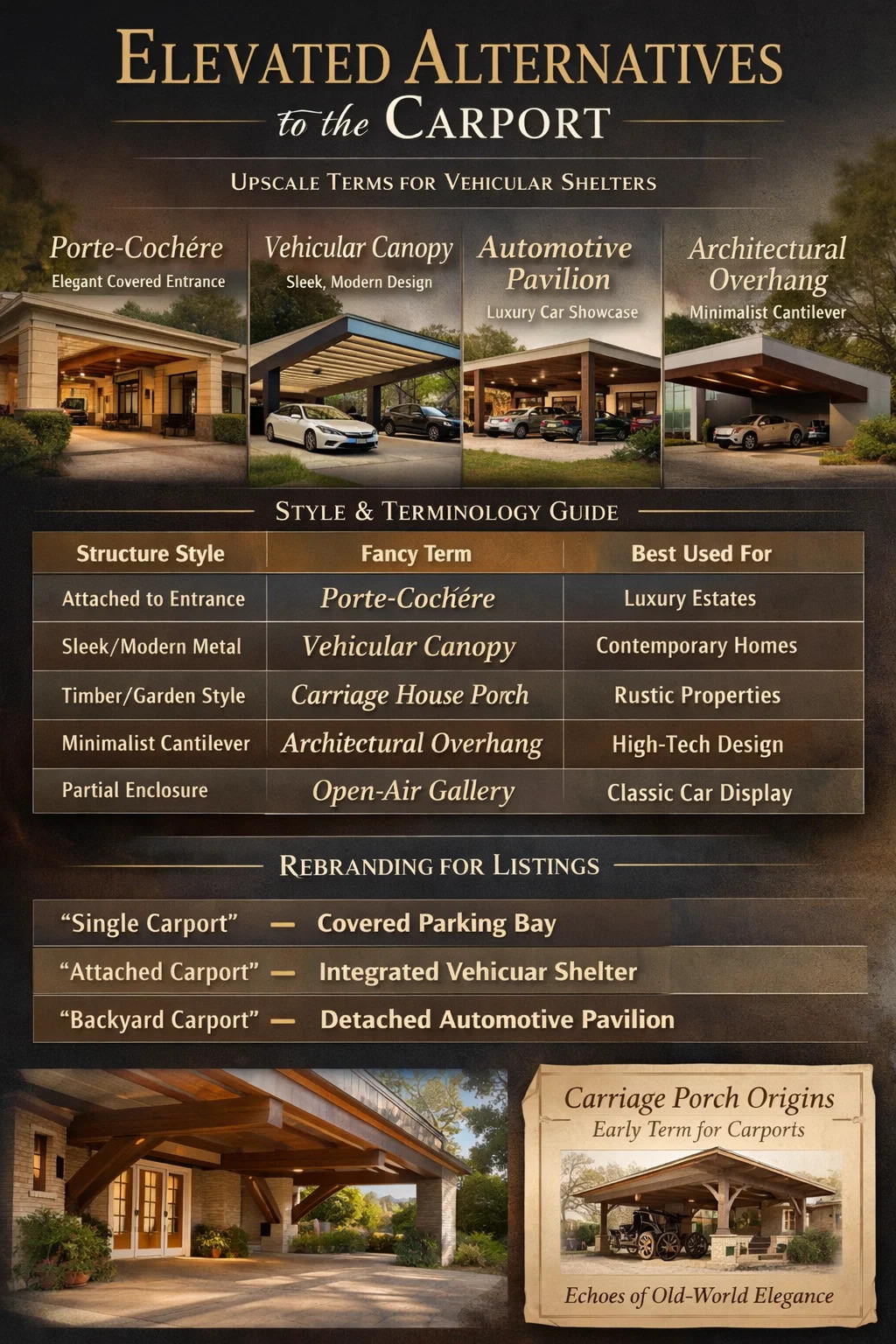
The most widely recognized "fancy" name for a carport is a porte-cochère. This French architectural term literally translates to "coach gateway." While a traditional carport is primarily designed for long-term parking, a porte-cochère is typically a grand, roofed structure extending from the entrance of a building to shelter vehicles as passengers alight. In high-end real estate and architectural circles, other elegant alternatives include vehicular canopy, auto gallery, and architectural pavilion.
Architectural Synonyms for Upscale Properties
When describing a structure that provides overhead protection for vehicles without being a fully enclosed garage, terminology plays a massive role in perceived value. Architects often eschew the word carport in favor of terms that highlight the design's integration with the landscape or the primary residence.
The Porte-Cochère vs. The Carport
A porte-cochère is distinguished by its placement. It is almost always attached to the main entrance of a luxury estate. Historically, these allowed horse-drawn carriages to pass through, keeping the elite dry while entering the home. Modern interpretations function similarly, serving as a prestigious drop-off point that adds significant curb appeal.
Vehicular Canopy
This term is frequently used in commercial and modern residential design. A vehicular canopy implies a sleek, often minimalist structure. It suggests a focus on form and engineering, making it a favorite for properties featuring mid-century modern or industrial aesthetics.
Automotive Pavilion
If the structure is detached and showcases high-end vehicles as part of the property's visual appeal, "pavilion" is the appropriate descriptor. An automotive pavilion treats the carport as an art piece, often utilizing premium materials like cedar, specialized steel, or glass.
Contextual Names Based on Design Style
The right name often depends on the specific design and regional preferences. Using the word carport might feel too utilitarian for a custom-built timber structure in a coastal area or a sleek metal structure in a city center.
| Structure Style | Fancy/Alternative Name | Best Used For |
|---|---|---|
| Attached to Entrance | Porte-Cochère | Luxury estates, grand hotels |
| Sleek/Modern Metal | Vehicular Canopy | Modernist homes, offices |
| Timber/Garden Style | Carriage House Porch | Cottages, rustic properties |
| Minimalist Cantilever | Architectural Overhang | High-tech urban design |
| Partial Enclosure | Open-Air Gallery | Showcasing classic cars |
Elevating Real Estate Listings
If you are selling a home, the vocabulary you choose can impact the psychological value of the property. While a carport is a functional asset, it often carries a "budget-friendly" connotation. By rebranding the space, you highlight its architectural intent rather than just its utility.
- Instead of "Single Carport," use covered parking bay to sound more professional and organized.
- Instead of "Attached Carport," use integrated vehicular shelter to suggest it was a planned part of the home's footprint.
- Instead of "Backyard Carport," use detached automotive pavilion to give the impression of a separate, high-quality outbuilding.
Historical Context: The Carriage Origins
The history of the carport is surprisingly deep. Before Frank Lloyd Wright popularized the modern term in the 1930s, these structures were often called carriage porches or motor porches. Using these vintage terms can add a sense of history and "old-world charm" to traditional or heritage-style homes.
The transition from porte-cochère to carport marked a shift from the era of horse-drawn transportation to the age of the automobile. Today, choosing the "fancier" name is often about reclaiming that sense of elegance and deliberate design that was present in the early 20th century.

 浙公网安备 33068302000509号