 English
 日本語
日本語 русский
 Español



Customer expresses intent; Communicate between the two parties; Provide analysis reports to customers; Reach a cooperation intention.
Content
- 1 What Is a Carport Kit — and Is It Right for You?
- 2 The Main Types of Carport Kits Explained
- 3 Roof Styles — How the Design Affects Performance and Price
- 4 Standard Carport Kit Sizes — Choosing the Right Footprint
- 5 Carport Kit Cost Breakdown: What You Will Actually Pay
- 6 What to Check Before Buying a Carport Kit
- 7 How to Install a Carport Kit: Step-by-Step Overview
- 8 Carport Kit vs. Custom Garage: How They Compare
- 9 Maintaining Your Carport Kit for Long-Term Performance
CARPORT KITS
What Is a Carport Kit — and Is It Right for You?
A carport kit is a pre-engineered, prefabricated structure that arrives with all the components needed to build a covered parking shelter — frame members, roof panels, fasteners, and instructions. Unlike a traditional garage build, a carport kit eliminates design guesswork and skilled-trades dependency. Most homeowners complete a single-vehicle steel carport kit installation in one to two days with basic hand tools.
The appeal is straightforward: you get weather protection for your vehicle at a fraction of the cost and time required to build an enclosed garage. A carport is typically open-sided, which makes it easier to permit, cheaper to build, and far more versatile than a fully enclosed structure. You can use the shelter for vehicles, outdoor equipment, firewood storage, or even an extended patio space.
That said, not every carport kit is the same. Materials, roof styles, frame gauges, and size options vary enormously — and choosing the wrong kit for your climate or vehicle type is one of the most common and costly mistakes buyers make. This guide walks through everything you need to know before placing an order.
Bottom Line Carport kits offer garage-grade vehicle protection for 30–60% less cost than a custom-built garage. The key is matching kit type, material, and size to your specific climate, vehicle, and site conditions.
The Main Types of Carport Kits Explained
Carport kits fall into several broad categories based on material and portability. Each has clear advantages and trade-offs depending on where you live, how long you need the structure, and how much you want to spend.
Steel Carport Kits
Steel is the most widely used material for permanent carport kits. Heavy-gauge steel frames — typically 12- to 14-gauge — handle heavy snow loads and high wind speeds that would buckle lighter alternatives. Steel carports are powder-coated or galvanized to resist rust, and many manufacturers apply a Galvalume or similar corrosion-resistant coating that can extend structural life to 40–50 years. Because steel is rigid and dense, these kits tend to require more assembly effort but deliver far superior long-term stability. Expect to pay $1,295 to $4,995 for a standard steel carport kit in most U.S. states, depending on size and customization.
Aluminum Carport Kits
Aluminum kits are lighter than steel, naturally rust-resistant, and particularly well-suited for coastal regions where salt air accelerates corrosion. They require less maintenance and are generally easier to assemble. The trade-off is structural strength — aluminum yields more under heavy snow or high wind than comparably sized steel frames. Aluminum kits are popular in the Southern U.S. and Gulf Coast regions where freeze-thaw cycles are minimal and the primary threat is humidity rather than snow load.
Wood Carport Kits
Wood carport kits — especially cedar carport kits — appeal to homeowners who want a structure that blends naturally with traditional or craftsman-style homes. Cedar is naturally rot-resistant and insect-resistant, making it a premium choice for exposed outdoor structures. Wood kits cost $10 to $20 per square foot in materials and require more maintenance than metal, but the aesthetic payoff is significant. A well-built wood carport can increase curb appeal considerably and complement landscaping in ways that metal structures often cannot.
Portable / Temporary Carport Kits
Portable carport kits use lightweight steel or aluminum poles and a fabric or polyethylene canopy roof. These are the most affordable option — typically $400 to $1,200 for a complete portable unit — and can be set up and taken down without any tools or foundation work. They are not suitable for areas with heavy snow or sustained high winds, and the canopy fabric typically requires replacement every two to five years. Portable kits work well as short-term solutions, seasonal shelters, or supplemental coverage for boats and recreational vehicles.
Polycarbonate Carport Kits
Polycarbonate panels on a metal frame offer a translucent roof option that lets in natural light while blocking UV rays and precipitation. This style is popular in Europe and increasingly available in North America. Polycarbonate carports cost $12 to $20 per square foot on average and offer a modern aesthetic that suits contemporary home styles. The panels are lightweight, impact-resistant, and available in clear, opal, or tinted finishes.
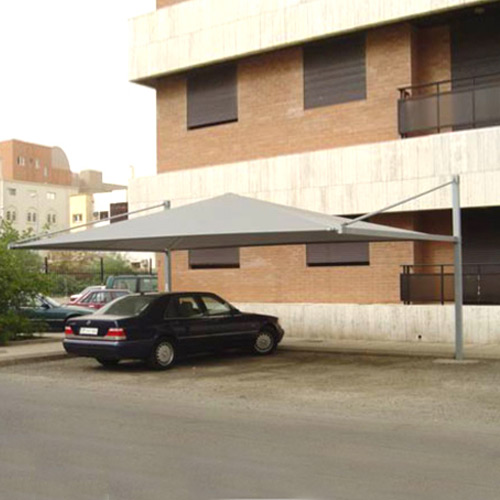
Roof Styles — How the Design Affects Performance and Price
When shopping for steel or aluminum carport kits, the roof style is one of the biggest factors influencing both structural performance and final cost. The three standard options each behave differently under weather stress.
| Roof Style | Design | Snow/Wind Performance | Relative Cost | Best For |
|---|---|---|---|---|
| Regular / Rounded | Horizontal panels, curved ends | Lowest — panels run horizontally, trapping debris | Lowest | Mild climates, minimal rain/snow |
| A-Frame / Boxed Eave | Horizontal panels, peaked ridge | Moderate — ridge sheds water better than rounded | Mid | Mixed climates, curb appeal priority |
| Vertical Roof | Panels run vertically down slope | Best — snow and water shed immediately | Highest | High snow or heavy rain regions |
For anyone in a region that regularly sees more than 20 inches of annual snowfall, a vertical roof is the clear recommendation. The vertically oriented panels allow snow to slide off immediately rather than accumulate on the surface. Many carport manufacturers offer engineer-stamped drawings for vertical roof models, which simplifies the permit process in jurisdictions that require structural documentation.
Standard Carport Kit Sizes — Choosing the Right Footprint
Sizing a carport kit correctly from the start saves money and frustration. A structure that is even slightly too narrow for your vehicle creates daily inconvenience, and upsizing after installation means a new kit and new site preparation costs. Use the following benchmarks as a starting point.
Single Vehicle
12 ft wide × 20 ft deep
Fits one standard passenger car or small truck. A 12-foot width is the minimum — consider 14 feet if you open doors frequently or drive a wider vehicle.
Double Vehicle
18–24 ft wide × 20–24 ft deep
Accommodates two standard vehicles side by side. An 18-foot width is tight; 20–24 feet gives comfortable clearance on both sides.
RV / Boat
20–24 ft wide × 31–45 ft deep
RVs vary significantly in height. Verify your specific RV height and add at least 2 feet of clearance. A 21-foot-long kit is the minimum for a small RV; large Class A coaches may require 40-plus feet of length.
Triple / Commercial
24–36 ft wide × custom depth
Suitable for three or more vehicles, farm equipment, or light commercial use. Custom widths are often available from manufacturers specializing in agricultural or commercial applications.
One practical tip: mark out the intended carport footprint on your property with stakes and string before ordering. Walking through the space at full scale reveals clearance issues — fence proximity, overhanging tree branches, drainage slopes — that are easy to miss on paper. Standard sizes include 12x20, 20x20, and 20x25 configurations for residential use, with custom sizes available for unusual site requirements.
Carport Kit Cost Breakdown: What You Will Actually Pay
Carport kit pricing involves more than the sticker price of the kit itself. Permit fees, site preparation, foundation work, and potential professional installation all add to the total. The table below shows realistic all-in cost ranges for different carport types in 2025–2026.
| Carport Type | Kit Cost (Materials) | DIY Labor | Pro Install | Permits + Site Prep |
|---|---|---|---|---|
| Portable / Temporary | $400–$1,200 | $0 (no skill needed) | N/A | Often none required |
| Steel Kit — Single Car | $1,295–$3,500 | $500–$1,000 saved | $500–$1,500 | $75–$800 |
| Steel Kit — Double Car | $2,500–$6,000 | $1,000–$2,000 saved | $1,000–$2,500 | $100–$800 |
| Wood / Cedar Kit | $3,000–$8,000 | Moderate skill needed | $2,000–$5,000 | $100–$800 |
| RV / Large Steel Kit | $4,000–$10,000 | Skilled DIY recommended | $1,500–$3,500 | $200–$800 |
Hidden Costs That Catch Buyers Off Guard
Beyond the line items above, several additional costs commonly add 20–40% to the initial budget:
- Concrete slab foundation: A poured concrete slab is the recommended base for permanent carport kits, adding $1,000–$3,000 depending on size. While gravel or compacted soil can work, concrete provides superior long-term stability, especially in freeze-thaw climates.
- Delivery and freight: Large steel kits are heavy. Freight charges on oversized shipments can run $200–$600 depending on distance and carrier. Some manufacturers include delivery in the kit price; confirm before comparing quotes.
- Engineer-stamped drawings: Many jurisdictions require certified engineering drawings for permit approval. These documents typically cost $200–$500 if not included with the kit.
- Site grading and drainage: An unlevel or poorly drained site requires additional earthwork before installation. Depending on severity, this can range from minor ($100–$300) to significant ($1,000+).
One worthwhile strategy: buy during fall or winter. Industry pricing data indicates that purchasing carport kits in the off-season can yield 25–40% savings compared to spring and summer peak pricing, when demand from homeowners and contractors surges.

How to Install a Carport Kit: Step-by-Step Overview
Most steel and aluminum carport kits are designed for DIY installation by two people with basic tools — a level, drill, wrench set, and rubber mallet cover the essentials. The actual assembly typically takes one to two weekends depending on kit complexity and your experience level. Here is the standard process.
Step 1
Check Local Permits and Building Codes
Before purchasing a kit, contact your local building department. 92% of U.S. jurisdictions require permits for permanent structures over 120 square feet. Unpermitted builds can result in fines up to $2,000 and removal orders. Permit fees typically range from $75 to $300 and approval may take several days to weeks depending on your municipality. HOA restrictions also apply in many communities — check those independently of the municipal permit process.
Step 2
Site Selection and Preparation
Choose a level, well-drained location with at least 18 inches of clearance on each side beyond the carport footprint. Call 811 before any digging to mark underground utility lines. Confirm the site respects required setbacks from property lines — these vary by jurisdiction but typically range from 3 to 10 feet. Clear vegetation, remove rocks, and address any drainage issues before breaking ground. A slope greater than 2% should be leveled or a graded drainage path created to prevent water pooling.
Step 3
Foundation Installation
Permanent carport kits perform best on a concrete slab, which provides a flat, stable surface for anchoring and prevents post settlement over time. For temporary or semi-permanent installs on gravel, ground anchors — J-type or auger-style — are driven into the soil at each post location. Match your anchor system to both the manufacturer's instructions and your local soil conditions. In areas with high frost depth, footings should extend below the frost line to prevent heave.
Step 4
Frame Assembly
Lay out all kit components and cross-check against the packing list before starting assembly. Identify the base rails, vertical posts, horizontal beams, and roof bows. Begin with the base installation — attach base rails to the foundation anchors and verify they are square and level. Erect vertical posts and connect them to the base. Then install horizontal roof bows across the span. The manufacturer's illustrated guide will show exact bolt torque specifications; follow these precisely, as undertightened connections are a primary cause of structural failure during high-wind events.
Step 5
Roof Panel and Trim Installation
Roof panels are installed from one end of the structure to the other, with each panel overlapping the previous one by the amount specified in the instructions. Use the provided fasteners — do not substitute with different hardware, as panel fasteners are typically self-sealing to prevent water infiltration at penetration points. Install trim pieces along the ridge and eave edges to cover exposed panel edges. Trim finishing gives the carport a polished appearance and prevents panel edges from lifting in wind.
Step 6
Final Anchoring and Inspection
Complete all anchor connections and verify that every bolt is tightened to specification. Walk around the structure and check for any panels that are not fully seated, any trim pieces that have not been fastened at every required point, and any structural member that appears to flex or shift when pressed. If a permit was required, schedule your final inspection before using the carport. Retain your permit documentation and kit warranty information in a safe place — you will likely need both if you ever sell the property.
DIY installation of a carport kit typically saves $1,400 to $3,500 compared to professional installation, making it an attractive route for homeowners comfortable with basic construction tasks. However, if you live in a high-wind zone exceeding 90 mph or are unfamiliar with structural assembly, professional installation is the safer choice — a structurally compromised carport in a windstorm creates significant property damage risk.
Carport Kit vs. Custom Garage: How They Compare
Many homeowners consider a carport kit as an alternative to building a full attached or detached garage. The comparison comes down to budget, security needs, and intended use.
Carport Kit
- Material cost: $1,295–$10,000
- Assembly time: 1–2 days (DIY)
- Permit complexity: Generally lower
- Open-sided — ventilated naturally
- No security against theft
- Easily expanded or relocated
- Adds 3–5% to property value
Custom Garage
- Material + labor: $20,000–$50,000+
- Construction time: 2–8 weeks
- More complex permitting process
- Fully enclosed, insulation possible
- Lockable — vehicle security provided
- Permanent structure, harder to change
- Can add 10–15% to property value
For most homeowners whose primary goal is weather protection — keeping a vehicle out of direct sun, rain, hail, or snow accumulation — a carport kit delivers the core benefit at a dramatically lower cost. A well-installed steel carport rated for 130 mph winds and a 35-pound snow load per square foot is a serious structure that will outlast most portable shelters by decades.
The main case for choosing a full garage over a carport kit comes down to security and enclosed storage. If you store tools, sporting equipment, or valuables alongside the vehicle, an enclosed lockable garage provides protection that an open-sided carport cannot match. Some enclosed carport options — with added side walls and end panels — offer a middle-ground solution with better security at a lower price than a full garage build.

Maintaining Your Carport Kit for Long-Term Performance
A quality steel carport kit requires minimal maintenance — but "minimal" is not the same as "none." A basic annual routine protects the coating, prevents fastener corrosion, and catches damage before it becomes structural.
Annually
Rinse all metal surfaces with a garden hose to remove accumulated road salts, bird droppings, and debris that hold moisture against the coating. Inspect every visible fastener for rust and replace any that show oxidation. Check trim pieces along eaves and the ridge for lifted edges or gaps that could allow water infiltration.
After Major Storms
Walk the full perimeter and check for bent frame members, loosened anchor points, or displaced roof panels. Even minor panel displacement should be corrected promptly — a partially unseated panel in a subsequent wind event can be ripped off, creating larger structural damage. Retighten any fasteners that show movement.
Every 5 Years
Inspect anchors at or below grade level for corrosion, particularly in coastal or high-humidity environments. Touch up any areas of the powder coat that have chipped using a compatible spray paint to prevent bare metal exposure. On wood carport kits, this is also the time to reapply sealant or stain to all exposed wood surfaces.
Steel carport kits from reputable manufacturers are designed to last 50 to 75 years with appropriate maintenance — a lifespan that comfortably exceeds the typical 20-year period over which most homeowners occupy a given property. That durability makes a well-chosen carport kit one of the more cost-effective property improvements available.

 浙公网安备 33068302000509号